The Complete Guide to the Pentax 67
The Pentax 67 is one of the most iconic medium format SLR systems ever made. Introduced in 1969 and produced for nearly four decades, it combines 6x7cm negatives with familiar 35mm SLR handling. This guide covers every version of the camera, the full lens lineup, film recommendations, common issues and repairs, and practical shooting tips from thousands of rolls of real-world use.

Pentax 67 at a Glance
Camera Type
Medium format SLR, 6x7cm frame
Production Years
1969–2009 (four versions)
Film Format
120 roll film, 10 frames per roll
Lens Mount
Pentax 67 bayonet (20+ lenses available)
Weight
~2.5 kg / 5.5 lbs (body + prism + lens)
Starter Kit Budget
$1,220–$2,470 (body, lens, prism, CLA)
Best Version to Buy
Pentax 6x7 MLU or Pentax 67 ($350–$800)
Must-Have Lens
105mm f/2.4 — the reason to own this camera
Camera Versions Compared
There are four distinct versions of the Pentax 67. All share the same lens mount and most accessories, but there are important differences in features, reliability, and price. Understanding these differences matters because it directly affects what you pay, what lenses meter correctly, and whether you get mirror lockup — which is essential for sharp results with a camera this heavy.
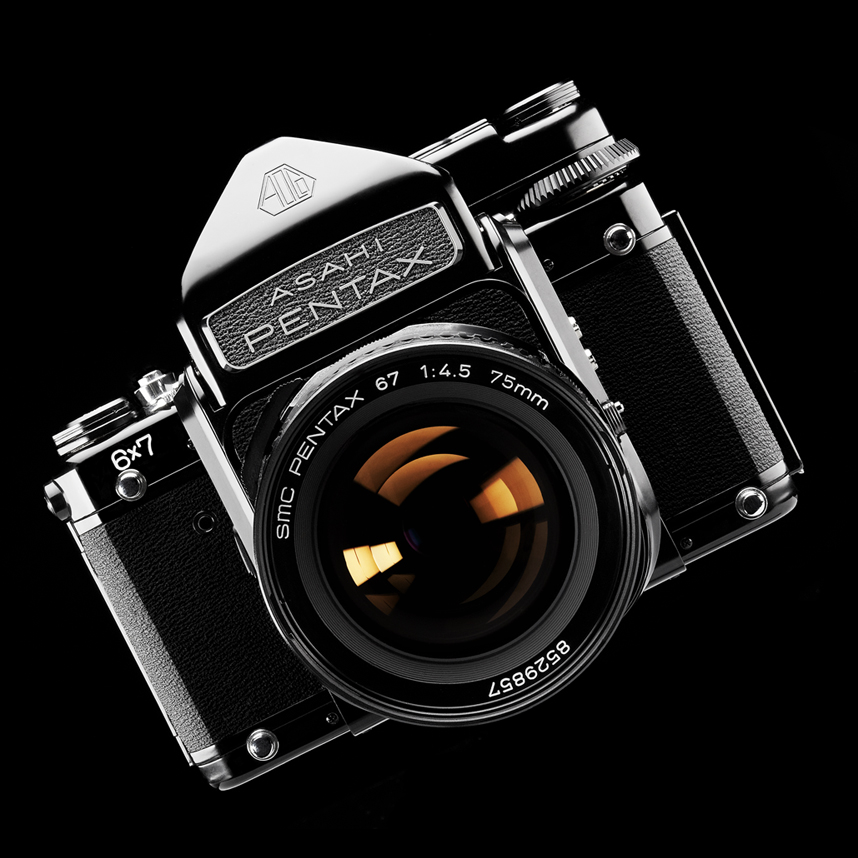
Asahi Pentax 6x7 (1969–1976)
The original. Marked "6X7" on the body, this is where the legend started. Asahi Optical (later Pentax) designed a medium format camera that handled like a big 35mm SLR at a time when most medium format cameras were either TLRs or rangefinders. The fully mechanical shutter runs from 1 second to 1/1000s plus Bulb, and it fires without batteries — the CdS metering prism is the only component that needs power.
The critical limitation is the lack of mirror lockup. The Pentax 67's mirror is massive — it has to clear a 6x7cm film gate — and it creates substantial vibration when it fires. Without MLU, you are at the mercy of mirror slap at shutter speeds between about 1/8s and 1/30s. Handheld this matters less (your body absorbs it), but on a tripod it can visibly soften images. At today's prices ($300–600 body only), the original 6x7 is only worth buying if it is significantly cheaper than the MLU version.
- — Fully mechanical shutter (1s to 1/1000s + Bulb)
- — No mirror lockup
- — CdS metering prism available (battery-dependent for meter only)
- — Heaviest version, older repair parts harder to source
- — Price range: $300–600 body only
Verdict: Avoid unless it is your only option. No MLU is a real limitation for a camera this heavy.
Pentax 6x7 MLU (1976–1989)
In 1976, Asahi addressed the single biggest complaint about the 6x7 by adding a mirror lockup switch — a small sliding lever on the right side of the body, just behind the lens mount. Flip it up, fire the shutter once to lock the mirror, then fire again to expose. Everything else about the camera is identical to the original 6x7.
This one addition transforms the camera. On a tripod with MLU engaged and a cable release, the Pentax 6x7 MLU delivers results as sharp as anything in medium format. And because the "MLU" designation is less glamorous than the later "67" rebrand, these bodies often sell for less despite being functionally identical to the Pentax 67. It is the best value in the entire system.
- — Added mirror lockup via sliding switch
- — Functionally identical to the later Pentax 67
- — Same CdS metering prism as original
- — Best value in the system: same capabilities at lower prices
- — Price range: $350–700 body only
Verdict: Best bang for the buck. Functionally identical to the Pentax 67.


Pentax 67 (1989–1998)
The 1989 refresh was primarily cosmetic — the "6X7" branding became "67" — but the important change was under the prism. Pentax switched from CdS (Cadmium Sulfide) metering cells to SPD (Silicon Photo Diode) cells. CdS cells are slow to respond, especially in low light, and they suffer from memory effect where a bright reading can temporarily skew subsequent readings. SPD cells respond instantly and don't have that problem.
The mechanical shutter, lens mount, and body design are all carried over from the 6x7 MLU. Minor manufacturing improvements mean 67-era bodies tend to be slightly more reliable, but the difference is marginal. If you find a clean 6x7 MLU for less than a 67, take the MLU. If prices are similar, take the 67 for the better metering.
- — Improved SPD metering prism (better low-light accuracy)
- — Same mechanical shutter and lens compatibility
- — Minor reliability improvements from newer manufacturing
- — Sweet spot of reliability and value
- — Price range: $400–800 body only
Verdict: The sweet spot. Newer manufacturing, improved metering, same great system.
Pentax 67II (1998–2009)
The 67II is a genuine redesign, not just a rebrand. Pentax added a built-in right-hand grip that dramatically improves handling, a top LCD panel showing exposure settings, and an AE prism with aperture priority auto exposure and selectable metering modes (center-weighted and spot). The shutter is now electronic with expanded speeds (added 2s and 4s), and the camera supports intentional double exposures.
The catch: the electronic shutter means the 67II requires a battery to fire. If the battery dies in the field, the camera is dead. The earlier mechanical bodies fire without any battery at all. The other catch is price — 67II bodies command $1,500–2,500, which is 3–4x the price of a 67 or 6x7 MLU. That price gap buys a lot of film and processing.
The 67II is genuinely the best camera in the system. Aperture priority exposure, spot metering, and the improved grip make it a significantly better handheld shooting experience. If you shoot handheld more than tripod, or if the convenience of auto exposure is important to your workflow, the 67II earns its premium.
- — Built-in right-hand grip, top LCD panel
- — AE prism with aperture priority auto exposure
- — Selectable metering modes (center-weighted, spot)
- — Electronic shutter with expanded speeds (battery required)
- — Double exposure capability
- — Price range: $1,500–2,500 body only
Verdict: The best camera in the system, but 3–4x the price. Worth it if you shoot handheld frequently or want aperture priority.


Which Version Should You Buy?
| 6x7 | 6x7 MLU | 67 | 67II | |
|---|---|---|---|---|
| Years | 1969–1976 | 1976–1989 | 1989–1998 | 1998–2009 |
| MLU | No | Yes | Yes | Yes |
| Metering | CdS prism | CdS prism | SPD prism | AE prism |
| Auto exposure | No | No | No | Aperture priority |
| Double exposure | No | No | No | Yes |
| Built-in grip | No | No | No | Yes |
| Price (body) | $300–600 | $350–700 | $400–800 | $1,500–2,500 |
| Best for | Budget | Value tripod | Best all-around | Handheld + features |
For most shooters, the Pentax 6x7 MLU or Pentax 67 are the right choice. They are functionally identical and can still be found for well under $1,000. The 67II is the better camera, but not 3x better. Put the savings toward lenses and film.
The Pentax 67 Lens System
The Pentax 67 lens lineup is the largest of any medium format system, with over 20 focal lengths from 35mm fisheye to 1000mm reflex. All lenses use the same bayonet mount and are compatible with every version of the body. Original Takumar lenses (1969–1979) have stop-down metering. Later SMC Pentax lenses support open-aperture metering with compatible prisms. The optical quality across the range is excellent — several of these lenses have developed cult followings for good reason.
105mm f/2.4 — The Legend
This is THE lens for the Pentax 67 system. A 55mm equivalent in 35mm terms, the 105mm f/2.4 is a fast normal lens that is razor sharp wide open with beautiful, creamy bokeh. It is the lens that made the Pentax 67 famous for portraiture, and it is the lens that most people buy the camera to use.
The 105mm has a unique optical characteristic: when shot directly into the sun or strong backlight, it produces a distinctive orange-red lens flare orb that has become a signature look for Pentax 67 portraiture. Some photographers consider this a flaw. Most consider it magic. Three versions of this lens exist, with the latest having the best multi-coatings, but all three are optically excellent.
The one real limitation is the minimum focus distance of 39 inches (about one meter). You cannot get tight headshots without extension tubes. For full-body and environmental portraits, this is not an issue. For tighter framing, consider the 90mm f/2.8 which focuses closer.
- — 55mm equivalent. Fast normal lens.
- — Razor sharp wide open, beautiful bokeh
- — Unique orange/red flare orb in backlit shots
- — Minimum focus distance: 39 inches
- — Price: $400–700 depending on version
Verdict: Buy this first. Period.
75mm f/4.5
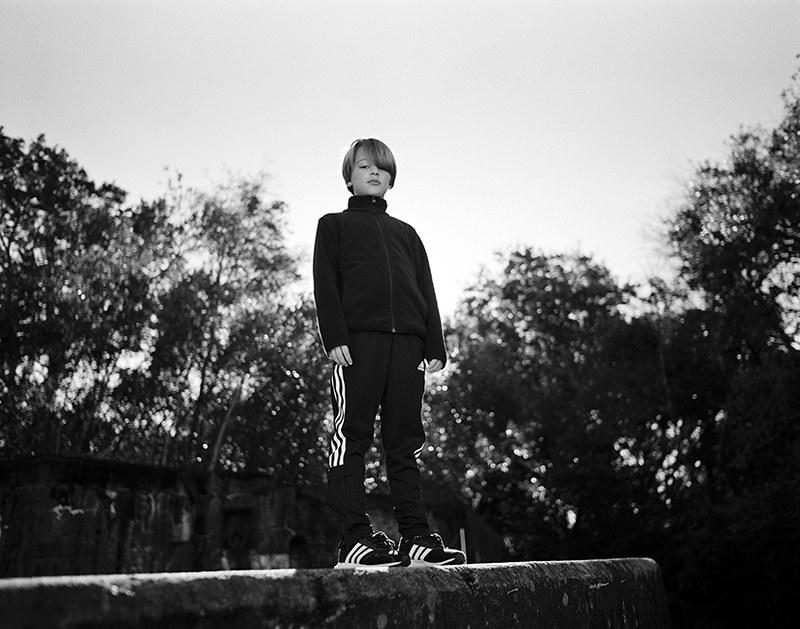
The 75mm (38mm equivalent) is a wide-normal lens that is extremely sharp, even stopped down just one stop. It is also absurdly cheap — often found for $100–200, making it the best value in the entire Pentax 67 system. At this price, there is no reason not to own one. (Note: Pentax also made a rare 75mm f/2.8 AL with an aspherical element — a different, much more expensive lens.)
This focal length is versatile. It works beautifully for environmental portraits where you want to include the subject's surroundings. It is a natural fit for street photography, travel, and landscapes. The slightly wide perspective on the 6x7 frame gives images a sense of place without the distortion of a true wide angle. Pair it with the 105mm and you have a two-lens kit that covers 90% of shooting situations.
- — 38mm equivalent. Wide-normal.
- — Extremely sharp stopped down, very good wide open
- — $100–200 — incredible value
- — Great for environmental portraits, street, landscapes
Verdict: The second lens to buy. Absurd value for the quality.
55mm f/4
A 28mm equivalent, the 55mm f/4 is a true wide angle for the 6x7 format. It is slower at f/4 than the normal and wide-normal lenses, which means the viewfinder is dimmer and you lose a stop of handholding capability. But it is sharp across the frame when stopped down to f/8 and captures a dramatic amount of the scene.
Some barrel distortion is visible at the edges, which is expected for this focal length on any format. For architecture, landscapes, and interiors, the 55mm delivers. It is not a lens you will use every day, but when you need wide, you need wide.
- — 28mm equivalent. True wide angle.
- — f/4 maximum — slower, dimmer viewfinder
- — Sharp across the frame stopped down
Verdict: Solid wide option if you need it.
45mm f/4
The 23mm equivalent ultra-wide. This is a heavy, chunky lens with a large front element that commands attention. The center is sharp wide open, but the edges soften noticeably until you stop down to f/8 or beyond. It is a specialized tool — excellent for dramatic landscapes, architecture, and environmental work where you want to exaggerate perspective.
- — 23mm equivalent. Ultra-wide.
- — Heavy, large front element
- — Stop down to f/8+ for best edge sharpness
Verdict: Specialized. Buy only if you need ultra-wide.
90mm f/2.8
The 90mm (46mm equivalent) sits between the 75mm and 105mm and offers a closer minimum focus distance of 25 inches — significantly closer than the 105mm's 39 inches. This makes it a strong alternative for portrait work where you want tighter framing without extension tubes. Many portrait photographers who have used both ultimately prefer the 90mm for the working distance flexibility.
A leaf shutter version (90mm f/2.8 LS) exists for flash sync at all shutter speeds. If you shoot studio portraits with strobes, the LS version is worth the premium.
- — 46mm equivalent. Normal-ish.
- — 25-inch minimum focus (closer than 105mm)
- — LS version available for flash sync
Verdict: Strong alternative to the 105mm, especially for tighter portrait work.
135mm f/4 Macro
A 70mm equivalent short telephoto with true macro capability. This is an excellent lens for product photography, still life, botanical work, and tight portraits. The macro capability means you can get close enough for detailed texture shots without additional accessories. Optical quality is outstanding — sharp, contrasty, and well-corrected.
- — 70mm equivalent. Short telephoto with macro.
- — Excellent for product, still life, tight portraits
Verdict: Niche but excellent if macro is your thing.
165mm f/2.8
The 85mm equivalent — the classic portrait focal length. At f/2.8 on the 6x7 format, the depth of field is paper-thin. Backgrounds dissolve into pure cream. The rendering is gorgeous, and if portraits are your primary subject, this lens will make you very happy. Pentax also made a separate 165mm f/4 LS (leaf shutter) version for studio flash sync at all shutter speeds — a different, slower lens.
The trade-off is size and weight. This is a large, heavy lens that adds significant heft to an already heavy camera. And honestly, the 105mm f/2.4 gets you 90% of the way there at half the price and weight. The 165mm is the premium choice for dedicated portrait shooters.
- — 85mm equivalent. Classic portrait focal length.
- — Gorgeous separation at f/2.8. Large and heavy.
- — Separate 165mm f/4 LS available for flash sync
Verdict: Premium portrait lens. The 105mm does 90% of what this does at half the price and weight.
200mm f/4
A 100mm equivalent telephoto. Solid optical performance, reasonable size for the focal length, and useful when you need more reach than the 165mm provides. Not a lens most shooters need in their first kit, but a capable performer if your work requires telephoto compression — think compressed landscapes, distant subjects, or isolating details from a distance.
- — 100mm equivalent. Telephoto.
- — Solid performer, reasonable size
Verdict: Good if you need reach. Not essential for most kits.
Which Lenses to Buy First
- Start with the 105mm f/2.4. Non-negotiable. This is the lens that defines the system.
- Add the 75mm f/4.5 for wide work. At $100–200, it is the best value in medium format glass.
- If you shoot portraits primarily, consider the 165mm f/2.8 or 90mm f/2.8 as a third lens.
- The 55mm f/4 if you need true wide angle for landscapes or architecture.
- Everything else is specialized. Buy as your work demands.
Viewfinders and Prisms
The Pentax 67 uses interchangeable viewfinders. Your choice affects weight, metering capability, and shooting style. This is not a minor decision — the viewfinder changes how you interact with the camera in fundamental ways.
Waist-Level Finder
The lightest viewfinder option, and it saves a meaningful amount of weight on a camera that is already pushing the limits of what you want to carry all day. The waist-level finder has no metering, so you will need a handheld meter or phone app. The image is also reversed left-to-right, which takes practice — panning to follow a subject feels backwards at first, but becomes second nature after a few rolls.
The waist-level finder excels for tripod work, landscapes, and street photography. Looking down into the finder is less conspicuous than holding a giant SLR to your eye, and it encourages a more deliberate, contemplative shooting style. It also opens up low-angle compositions that would be uncomfortable with an eye-level prism.
- — Lightest option (saves significant weight)
- — No metering — use handheld meter
- — Reversed left-right image (takes practice)
- — Price: $50–150
TTL Metering Prism
The metering prism turns the Pentax 67 into a proper eye-level SLR with center-weighted TTL metering. It adds significant weight — you will notice it — but the convenience of built-in metering and correct left-right viewing is worth it for many shooters, especially handheld work where speed matters.
Two generations exist: the older CdS version (slower to respond, prone to memory effect) and the SPD version from the Pentax 67 era (faster, more accurate). The SPD version is worth the small price premium. All metering prisms can drift over time, so budget for a CLA or keep a handheld meter as backup. A prism that reads consistently one stop off is still useful — just compensate.
- — Center-weighted TTL metering
- — Eye-level viewing like a 35mm SLR
- — CdS version (older) vs SPD version (better)
- — Price: $150–400 depending on version and condition
AE Prism (67II only)
The AE prism is exclusive to the Pentax 67II and offers aperture priority auto exposure, selectable metering modes (center-weighted and spot), and the most accurate metering in the system. It is typically included with a 67II body purchase. If you own a 67II, this is the prism you want.
Recommendation: If you shoot on a tripod with a handheld meter, the waist-level finder saves weight and money. If you shoot handheld or want convenience, the TTL metering prism is worth the weight penalty. Budget for a CLA if meter readings seem off.
Film Recommendations
The Pentax 67 shoots 120 and 220 film (10 frames on 120, 21 on 220). 220 is nearly extinct, so plan on 120. At 10 frames per roll, every shot costs $1.50–3.00+ with processing. Choose your film deliberately. The good news: medium format film has so much resolving power that even budget film stocks look stunning on a 6x7 negative.
Color Negative
- Kodak Portra 400 — The default choice for a reason. Gorgeous skin tones, extraordinary exposure latitude (overexpose by a stop for best results), and fine enough grain that 6x7 negatives look nearly grainless. If you only shoot one color stock, make it Portra 400.
- Kodak Portra 160 — Finer grain and lower speed. Ideal for bright daylight and tripod work where you have plenty of light. The color palette is slightly cooler than Portra 400, with exquisite skin rendering.
- Kodak Ektar 100 — Saturated, punchy, and fine-grained. Excellent for landscapes where you want vivid color. Less forgiving of overexposure than Portra — Ektar prefers accurate exposure or slight underexposure.
- Kodak Gold 200 — The budget option. Warmer tones, slightly more grain, but perfectly good for casual shooting. At $7–8 per roll versus $12+ for Portra, the savings add up when you are learning.
Black and White
- Ilford HP5 Plus 400 — Versatile, pushes well to 800 or 1600, classic look. The workhorse B&W stock. In medium format, the grain is barely visible even at 400.
- Ilford Delta 100 — Fine grain, high detail, tabular grain technology. Ideal for landscapes and architecture on a tripod where you want maximum sharpness and tonal range.
- Kodak Tri-X 400 — The classic. Beautiful grain structure that practically defines what black and white film looks like. In 6x7, Tri-X has a wonderful organic quality.
- Ilford FP4 Plus 125 — Extremely fine grain and rich tonal range. A traditional-grain film that rewards careful exposure and development. Gorgeous in medium format.
Slide Film
- Fuji Provia 100F — Fine grain, accurate colors, professional reliability. Slide film demands precise exposure — there is almost no latitude for error. But when you nail it, the results are breathtaking.
- Fuji Velvia 50 — Hyper-saturated. Greens are electric, reds are molten, skies are impossibly blue. Landscapes only. Absolutely unforgiving of exposure errors. Meter carefully.
- Kodak Ektachrome E100 — Slightly warmer than Provia with excellent quality. A good alternative if you find Provia too cool-toned.
A note on 6x7 slide film: A properly exposed 6x7 transparency on a light table is one of the most stunning things in photography. The detail, the color saturation, the physical presence of a medium format chrome — it is worth trying at least once, even if you normally shoot negative film.
Shooting Tips
Loading Film
Open the film back by pulling up on the latch on the left side of the camera. The empty spool sits on the right, the fresh roll goes on the left. Thread the backing paper leader under the roller and into the slot on the take-up spool. Align the arrow on the backing paper with the red dot on the camera body. Close the back and wind the advance lever until the film counter reaches "1." You will feel increased resistance when the film is properly tensioned.
Take your time loading. A misloaded roll means 10 wasted frames. If the advance lever feels too loose or the counter is not advancing, open the back and start over. It is better to waste 30 seconds than an entire roll.
Metering
If using the TTL prism, remember it is center-weighted — the meter emphasizes the middle of the frame. Point the center at the most important tonal area (skin for portraits, the brightest area you want detail in for landscapes), lock the reading, then recompose. For scenes with extreme contrast, meter the highlights and shadows separately and split the difference, or just meter the shadows and let the highlights ride.
If using the waist-level finder, you need a handheld meter. The Sekonic L-308X is compact and reliable. Phone apps like Lightmeter (iOS) are surprisingly accurate and always in your pocket. Incident metering (pointing the meter at the camera from the subject's position) is generally more reliable than reflective metering for this camera, because it is not fooled by backlight or dark backgrounds.
The Sunny 16 rule works well as a sanity check: on a sunny day, set aperture to f/16 and shutter speed to the reciprocal of your film speed (f/16 at 1/400s for 400 speed film). Adjust from there.
Handheld Shooting
The Pentax 67 weighs about 2.5kg (5.5 lbs) with a prism and lens. It is heavy, but shootable handheld. The minimum safe shutter speed for sharp results is around 1/125s. Some experienced shooters consistently get sharp frames at 1/60s, but do not count on it when you are starting out.
Technique matters. Brace your elbows against your body. Use the left hand to support the lens, not grip the body. Exhale slowly and squeeze the shutter release — do not jab it. The camera's mass actually works in your favor: it resists the small micro-tremors that plague lighter cameras. Use MLU even when handheld for a marginal sharpness improvement.
Tripod Shooting
This is where the Pentax 67 truly excels. On a sturdy tripod with MLU engaged and a cable release, the system delivers staggering resolution. The workflow: compose and focus, engage mirror lockup, wait 1–2 seconds for all vibration to settle, then fire the shutter via cable release. At slow shutter speeds, this workflow is non-negotiable for sharp results.
A sturdy tripod is essential. This camera will shake a lightweight travel tripod. Look for legs rated for at least 15 lbs / 7 kg. A ball head with an Arca-Swiss plate works well, though some photographers prefer geared heads for precise landscape compositions.
Focusing
The stock focusing screen is adequate but not especially bright, particularly with slower lenses like the 55mm f/4. The split-prism center of the screen works well in good light — line up the edges of your subject across the split and they will snap into focus. In low light, the split prism may black out; use the surrounding microprism ring or ground glass instead.
Maxwell Hi-Lux replacement screens significantly improve brightness and are worth considering if you find yourself struggling to focus, especially with slower lenses. At $2–3 per frame, nailing focus before you press the shutter is worth any investment in a better screen.
Essential Accessories
Grips
A wooden left-hand grip is almost mandatory. The Pentax 67 body is a flat-sided metal box, and a wooden grip transforms the handling. It gives your left hand something to wrap around, makes the camera feel more secure, and subtly reduces perceived weight. Third-party wooden grips are available from multiple makers for $30–80.
For the right hand, several makers produce custom grips (search for Artit grips or @pimp_my_pentax on Instagram). The 67II has a built-in right grip which is one of its best features. For earlier bodies, even a simple leather half-case improves the grip.
Cable Release
A standard threaded cable release screws into the shutter button. It is essential for tripod work with MLU — you do not want to touch the camera after locking the mirror up. Buy two. They are cheap ($10–20) and they break or get lost. Keep one in the bag, one on the camera.
Lens Hoods
Use them. Always. The older Takumar and early SMC lenses have vintage coatings that are more susceptible to flare than modern glass. The original Pentax rubber screw-on hoods are excellent, easy to reverse for storage, and still available used. A hood is the cheapest insurance against washed-out contrast.
Strap
This camera needs a serious strap. The thin nylon strap that may come with a used body will dig into your neck within an hour. The Peak Design Slide or any wide, padded strap rated for heavy cameras is a significant quality-of-life upgrade. Black Rapid sling straps work well for all-day carry — distributing the weight across your torso rather than your neck.
Light Meter
If you use the waist-level finder, or if your TTL prism meter has drifted, a handheld meter is essential. The Sekonic L-308X is compact, reliable, and does both incident and reflective readings. Phone apps like Lightmeter (iOS) and Light Meter Free (Android) are surprisingly good as backup meters, and you always have your phone with you.
Incident metering — where you hold the meter at the subject and point it back toward the camera — is more reliable than reflective metering for most situations with this camera. It is not fooled by dark or bright backgrounds the way in-camera reflective metering can be.
Common Issues and Troubleshooting
The Pentax 67 is a mechanical tank, but it is also 30–50 years old. Every mechanical camera needs maintenance, and the Pentax 67 is no exception. Here are the most common issues and how to address them.
Mirror Stuck Up
The most common issue, especially on cameras that have sat unused in a closet for years. The cause is almost always dried or gummed-up lubricant in the mirror mechanism. The mirror fires up during exposure and should return on its own — when it does not, you see black through the viewfinder and the camera appears dead.
Quick fix: remove the lens and gently — gently — press the mirror down with a finger. Do not force it. If it returns to position and the camera then fires normally, it may be a one-time issue. If it recurs, the camera needs a CLA from a qualified technician. Prevention: shoot the camera regularly. Mechanical cameras need to be exercised to keep lubricants distributed.
Shutter Not Firing
First, check the obvious. Is the film advance lever fully wound? The shutter will not fire until the film is advanced. Is the mirror lockup switch disengaged? If MLU is engaged and the mirror is already up, the next press fires the shutter, not the mirror. On the 6x7 and 67, a dead battery only kills the meter — the shutter is fully mechanical and fires without power. On the 67II, the battery is required for the electronic shutter.
If none of the above apply, the shutter mechanism may need a CLA. Sluggish or inconsistent shutter speeds are a sign of old lubricant. Cold weather can also slow mechanical shutters — if you are shooting in freezing temperatures, keep the camera warm under your jacket between shots.
Light Leaks
Light leaks are common on older bodies and almost always caused by degraded light seals — the thin foam strips around the film back door and mirror box that block stray light. Symptoms include fogging on the edges of negatives, orange streaks on color film, or unexplained haze on one side of the frame.
The fix is replacing the light seals. Pre-cut seal kits are available online for $15–25, and the replacement is a manageable DIY project with tweezers, a toothpick, and patience. Most technicians include seal replacement as part of a CLA.
Inaccurate Meter
TTL prism meters drift over time. If your negatives are consistently over or underexposed by a stop or more, and you have verified your metering technique, the prism likely needs recalibration. Quick fix: use a handheld meter or phone app as your primary meter, and use the prism as a secondary reference. Real fix: CLA of the prism by a technician who can recalibrate the meter circuit.
Film Advance Issues
Film not advancing properly, unintentional double exposures, or blank frames usually point to a loading issue. Verify the backing paper is aligned to the red dot and the leader is properly threaded into the take-up spool. If the film counter does not advance, the counter mechanism may need internal cleaning. If winding feels gritty or rough, the camera needs a CLA.
Mirror Slap and Vibration
This is not a defect — it is a characteristic of the camera. The mirror is massive and creates significant vibration when it fires. The danger zone is shutter speeds between 1/8s and 1/30s, where mirror vibration has the most time to affect the exposure. The solution: either go faster (1/60s and above) or go slower (use MLU, cable release, and wait 1–2 seconds for vibration to settle before firing).
Finding a Repair Technician
A CLA (Clean, Lubricate, Adjust) costs $250–400 typically and is the single best investment you can make in a used Pentax 67's longevity. For a detailed breakdown of the repair process, specialist technicians, costs, and when to send your camera in, see our dedicated Repairing the Pentax 67 section.
Repairing the Pentax 67
A Pentax 67 is a mechanical camera built to last decades, but every mechanical system needs maintenance. Whether you have just purchased a used body or your longtime shooter is developing issues, understanding the repair process helps you make informed decisions about keeping your camera in top condition.
What a Full CLA Includes
A CLA (Clean, Lubricate, Adjust) is the standard professional service for the Pentax 67. A qualified technician will disassemble the camera, clean degraded lubricants from the shutter mechanism and film transport, remove sticky stoppers from the mirror assembly and shutter assembly, replace light seals and the mirror bumper, apply fresh lubrication throughout, and calibrate both the meter and shutter speeds back to factory specifications. When done properly, a CLA returns the camera to like-new mechanical operation.
Budget $250–400 for a full CLA on a Pentax 67 body. This is not optional for a used purchase — it is the single most important investment you can make in the camera's reliability and longevity. A CLA'd Pentax 67 should give you years of trouble-free shooting.
The Go-To Specialist: Eric Hendrickson at Pentaxs.com
Eric Hendrickson is a retired Pentax technician based in Tennessee who has been servicing Pentax 67 cameras since 1969. He took over Pentax's repair operation when they stopped servicing film cameras — including their parts inventory. In the Pentax 67 community, his name comes up in virtually every repair conversation. He is widely regarded as the most experienced and trusted specialist for this camera.
Eric's Repair Process
Every camera that goes through Eric's process receives the same thorough treatment: a full clean and lube of the shutter and film transport, removal of sticky stoppers in the mirror and shutter assemblies, light seal and mirror bumper replacement, and full calibration of meter and shutter speeds. Minor repairs are included. Equipment is returned via USPS.
- — Free estimates — send your camera for evaluation at no cost
- — Models serviced: Pentax 6x7 (all versions) and Pentax 67 bodies and lenses
- — Does not service the Pentax 67II (electronic shutter requires different expertise)
- — Warranty: Six months on Pentax 67 bodies, one year on 35mm units and lenses
- — Contact: pentaxrepairs@aol.com
- — Turnaround: Typically 1–2 weeks based on community reports, though times may vary
Community feedback is consistently positive — fair pricing, fast turnaround, and meticulous work. Multiple forum threads on Photrio and PentaxForums describe his service as some of the best camera repair work they have experienced.
67II Repair Options
The Pentax 67II has an electronic shutter, which limits the number of technicians who can work on it. Eric Hendrickson at pentaxs.com does not service the 67II. For 67II repairs, Advance Camera Repair in Portland, OR is one of the few shops that will take on the work. Nippon Photoclinic handles 67II bodies on a case-by-case basis. The r/AnalogCommunity subreddit is a good place to ask for current 67II technician recommendations.
Common Repairs and What They Cost
| Repair | Typical Cost | DIY? |
|---|---|---|
| Full CLA (body) | $250–400 | No — send to a specialist |
| Light seal replacement | $15–25 (kit) | Yes — manageable with patience |
| Prism meter recalibration | Part of CLA | No — requires test equipment |
| Mirror mechanism service | Part of CLA | No — internal disassembly required |
| Lens CLA | $75–150 | No — optical alignment critical |
| Focusing screen replacement | $5–10 (labor) | Yes — straightforward swap |
When to Send Your Camera for Service
- — Just purchased used: Always budget for a CLA on any used Pentax 67 unless the seller can document a recent service.
- — Mirror sticking: If the mirror stays up after firing, dried lubricant in the mirror mechanism is the most likely cause. A CLA will resolve it.
- — Inconsistent shutter speeds: If exposures are erratic or shutter sounds sluggish, the shutter mechanism needs cleaning and recalibration.
- — Meter drift: If your TTL prism consistently reads a stop or more off, it needs professional recalibration.
- — Preventive maintenance: Even if the camera seems fine, a CLA every 5–10 years keeps everything running smoothly.
Bottom line: For Pentax 6x7 and 67 bodies, pentaxs.com is the first place to contact. Free estimates, decades of Pentax-specific experience, and access to original Pentax parts. Send an email to pentaxrepairs@aol.com with your camera's model and symptoms for a no-obligation quote.
Buying Guide
Where to Buy
- KEH Camera (keh.com) — Graded condition ratings, return policy, reliable. The safest option for buying used. Their "Bargain" grade often looks better than described.
- eBay — Widest selection, but use caution with ungraded listings. Check seller feedback carefully. "Untested" usually means "broken." Ask questions before bidding.
- r/photomarket on Reddit — Peer-to-peer sales from fellow photographers. Often good prices and honest descriptions. Check user history and reputation.
- Local camera shops — Increasingly rare for medium format, but worth checking. You can handle the camera before buying, which is invaluable.
- Japan imports — Japanese sellers on eBay often have excellent-condition gear that was well maintained. Language barrier can make condition assessment harder, but the quality is generally high.
What to Check Before Buying
- Shutter fires at all speeds — listen for timing differences between 1s and 1/1000s
- Mirror lockup switch functions (on MLU, 67, and 67II bodies)
- Film advance is smooth and consistent through a full wind cycle
- Light seals are intact — look inside the film back with a flashlight for crumbling foam
- Lens mount is clean, no damage to the bayonet tabs
- If buying with prism: meter needle responds to changes in light
- Ask if the camera has had a recent CLA — this is a huge value add and can justify a higher price
Budget Planning
| Item | Budget Range |
|---|---|
| Body (6x7 MLU or 67) | $350–800 |
| 105mm f/2.4 lens | $400–700 |
| TTL metering prism | $150–400 |
| Wooden grip | $30–80 |
| CLA (recommended) | $250–400 |
| Cable release | $10–20 |
| Strap | $30–70 |
| Total starter kit | $1,220–2,470 |
The wide range reflects the variability in the used market. Patient shopping, buying a 6x7 MLU instead of a 67, and finding a body that has already been CLA'd can save you hundreds. The 105mm f/2.4 is the one place not to cut corners — it is the reason to own this camera.
Pentax 67 vs Other Medium Format Cameras
The Pentax 67 is not the only medium format option. Here is how it compares to the cameras it is most often weighed against — with honest assessments of where it wins and where it doesn't.
Pentax 67 vs Mamiya RB67 / RZ67
Both are 6x7 SLR systems, but they have fundamentally different design philosophies. The Mamiya RB67 and RZ67 have a rotating film back (switch between portrait and landscape without turning the camera), bellows focusing for macro work without accessories, and a modular back system that lets you swap film mid-roll. The RB67 is fully mechanical; the RZ67 adds electronics and auto exposure.
The Pentax 67 handles more like a large 35mm SLR — pick it up and shoot. The Mamiya is more of a system camera designed around tripod and studio use. If you shoot primarily in a studio or on a tripod, the Mamiya's rotating back is a real advantage. If you want versatility, field portability, and the largest lens selection in 6x7, the Pentax wins.
| Pentax 67 | Mamiya RB67/RZ67 | |
|---|---|---|
| Format | 6x7cm | 6x7cm |
| Type | SLR (35mm-style) | SLR (modular system) |
| Rotating back | No | Yes |
| Bellows focus | No | Yes |
| Lens selection | 20+ lenses | 25+ lenses |
| Handheld use | Practical | Difficult (heavier) |
| Best for | Field, travel, portraits | Studio, tripod work |
Pentax 67 vs Hasselblad 500C/M
The Hasselblad 500C/M shoots 6x6cm (square format) — a smaller negative than the Pentax 67's 6x7cm. The Hasselblad is a fully modular system with interchangeable film backs, viewfinders, and lenses. It is significantly lighter and more compact. The Zeiss lenses are legendary for their rendering.
The Pentax 67 gives you a larger negative (roughly 20% more area than 6x6), handles more intuitively for 35mm shooters, and has a much larger lens lineup at lower prices. The Hasselblad wins on portability, modularity, and the ability to swap film backs mid-roll. Both are excellent systems — the choice comes down to whether you value negative size and handling (Pentax) or modularity and compactness (Hasselblad).
Pentax 67 vs Mamiya 7
The Mamiya 7 is a 6x7 rangefinder — not an SLR. It is dramatically lighter and more portable. No mirror slap means no vibration issues. The lenses are multicoated and extremely sharp. It is the camera you take when you want 6x7 negatives without the weight penalty.
The trade-offs: limited lens selection (only 6 lenses, from 43mm to 210mm), no SLR viewing (you're looking through a rangefinder window, not through the lens), no close-focus capability, and no interchangeable viewfinders. The Mamiya 7 is a focused tool for landscapes and travel. The Pentax 67 is a versatile system for everything from portraits to macro to architecture.
Pentax 67 vs Fuji GW690 ("Texas Leica")
The Fuji GW690 shoots an even larger 6x9cm negative with a fixed 90mm f/3.5 lens. It has no interchangeable lenses, no metering, and no interchangeable viewfinders. It is essentially a large point-and-shoot — extremely simple and extremely reliable. If you want the largest possible negative from a handheld camera and don't need lens interchangeability, the GW690 is compelling. If you want a system, the Pentax 67 is the clear choice.
Key Terms Glossary
Common terms you'll encounter when researching the Pentax 67 system, explained clearly.
- CLA (Clean, Lubricate, Adjust)
- A professional camera service where a technician disassembles the camera, cleans degraded lubricants, applies fresh lubrication, replaces light seals, and calibrates shutter speeds and meter accuracy. Costs $250–400 for a Pentax 67. Recommended for any used purchase.
- MLU (Mirror Lockup)
- A feature that locks the mirror in the up position before the shutter fires, eliminating mirror slap vibration. Activated by a sliding switch on the right side of the camera body (on 6x7 MLU, 67, and 67II). Essential for sharp results on a tripod at slow shutter speeds.
- TTL (Through The Lens) Metering
- A light metering system built into the prism viewfinder that reads light through the lens. Center-weighted on the Pentax 67 — it emphasizes the center of the frame. Requires battery to operate, but the mechanical shutter fires without power.
- 120 Film
- Standard medium format roll film. Backed with opaque paper. Yields 10 frames at 6x7cm in the Pentax 67. Available in color negative, black and white, and slide (transparency) from manufacturers including Kodak, Ilford, and Fuji.
- 6x7 Format
- A medium format negative measuring approximately 56mm × 69mm. Roughly 4.5 times the area of a 35mm frame and about 20% larger than 6x6cm (Hasselblad). The rectangular aspect ratio is close to 5:4, matching standard print proportions with minimal cropping.
- CdS vs SPD Metering Cells
- Two types of light-sensing cells used in Pentax 67 metering prisms. CdS (Cadmium Sulfide) cells are found in older 6x7-era prisms — they respond slowly to light changes and suffer from "memory effect." SPD (Silicon Photo Diode) cells, used in the Pentax 67 and 67II prisms, respond instantly and are more accurate.
- LS (Leaf Shutter) Lenses
- Certain Pentax 67 lenses (90mm f/2.8 LS, 165mm f/4 LS) have a built-in leaf shutter that allows flash synchronization at all shutter speeds. Standard focal-plane shutter bodies sync flash only at 1/30s or slower. The LS lenses are essential for studio strobe work.
- Takumar vs SMC Pentax Lenses
- The earliest Pentax 67 lenses carry the "Takumar" brand (1969–1979) and use stop-down metering. Later "SMC Pentax" lenses support open-aperture metering with compatible prisms. Both are optically excellent; the SMC versions have improved coatings and more convenient metering.
Sample Images
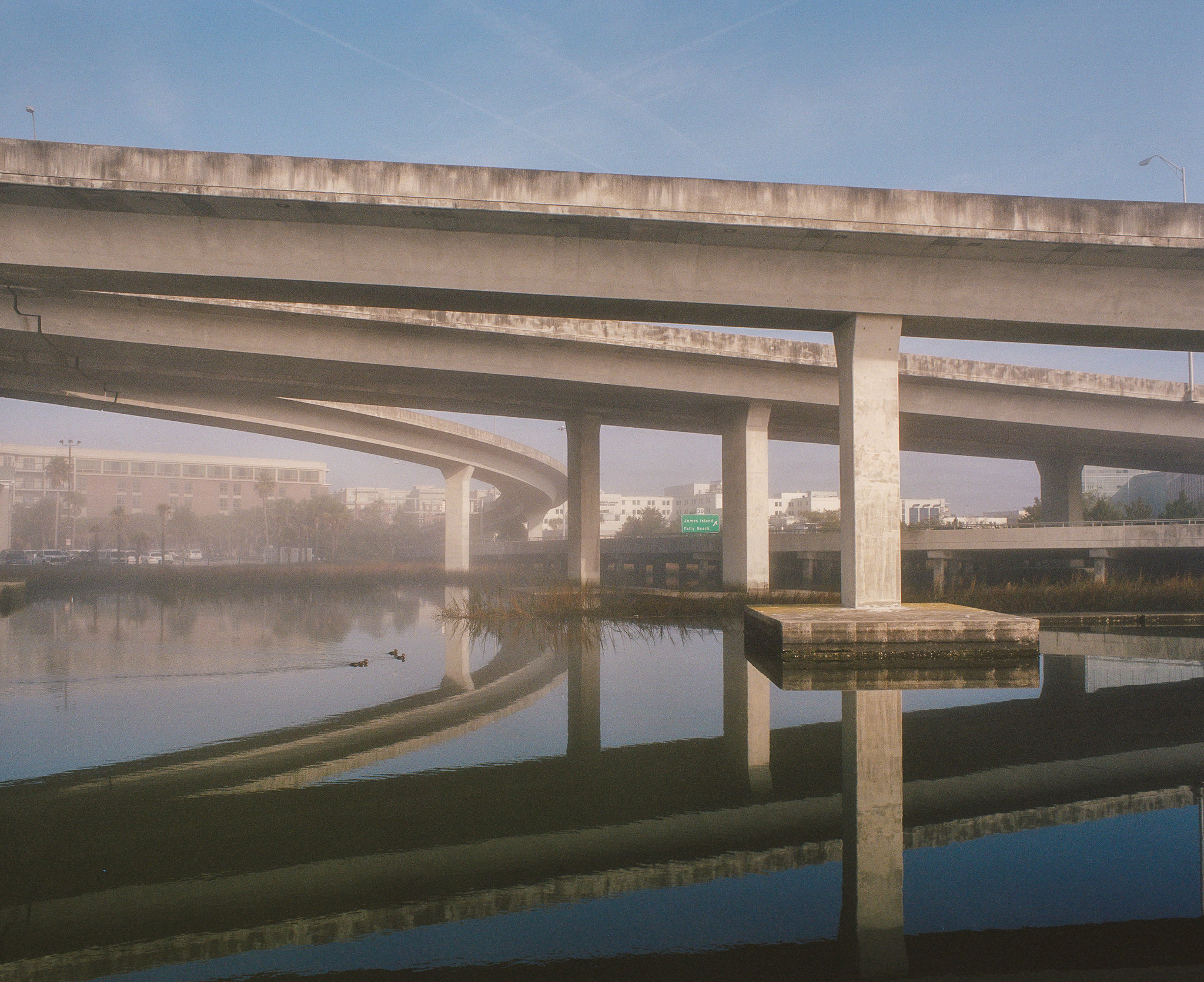
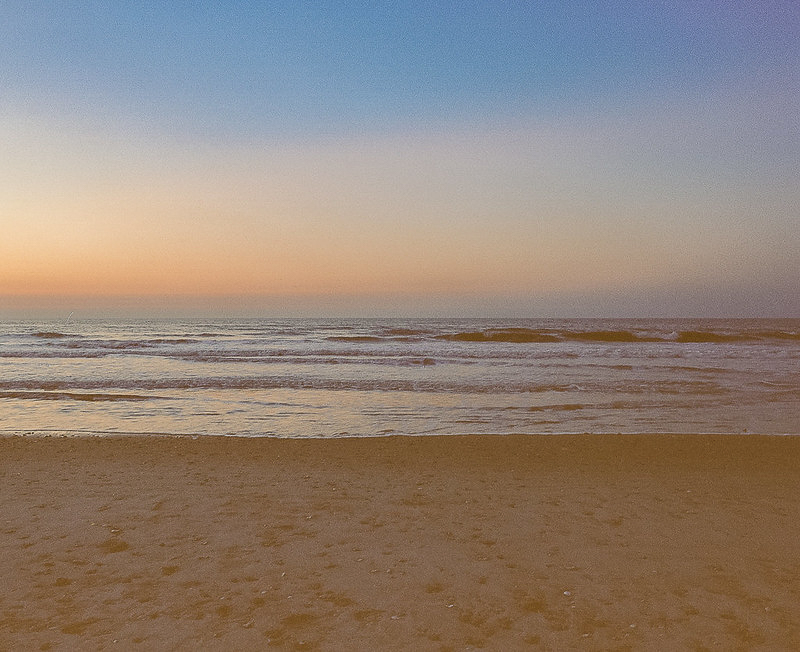
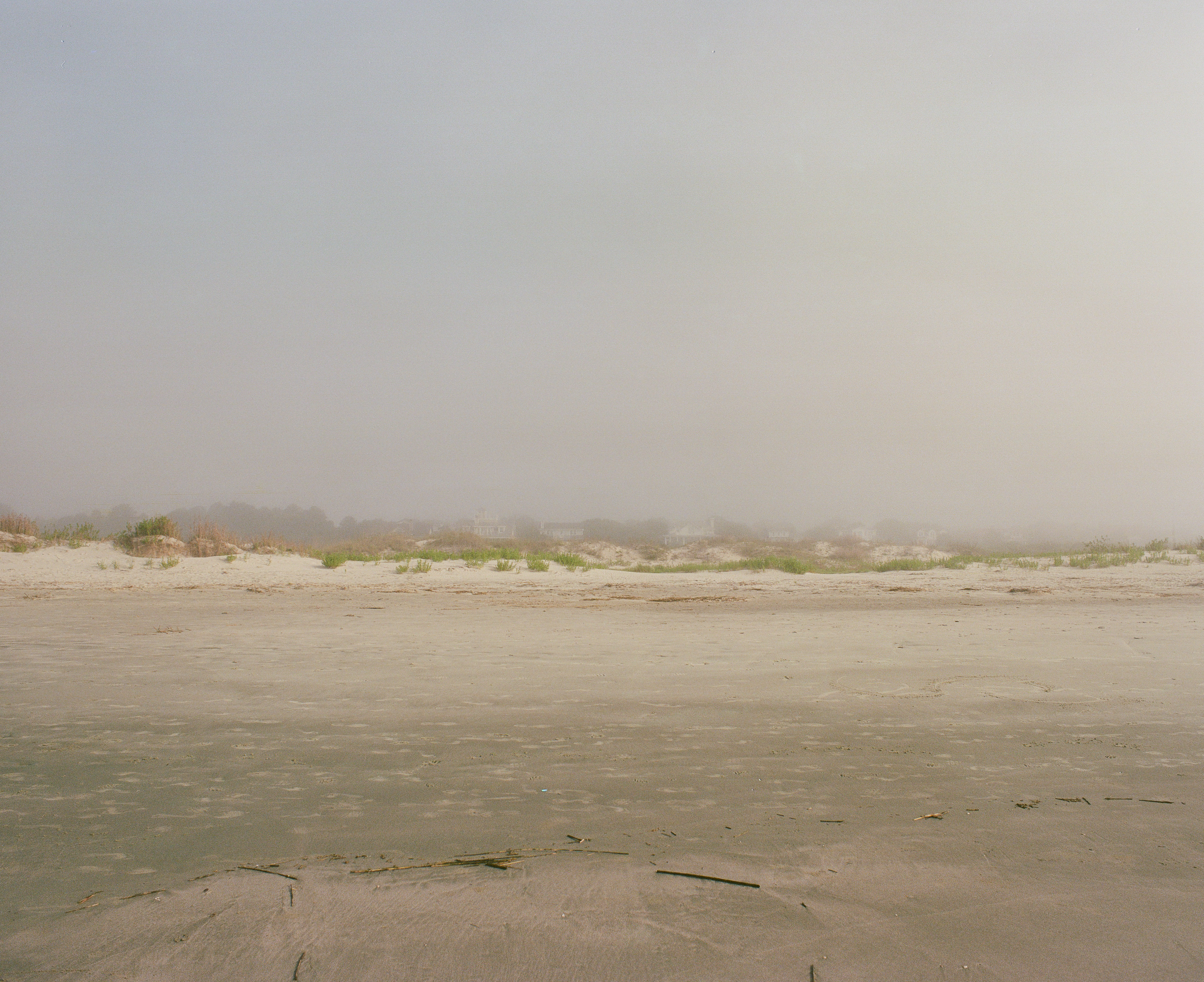
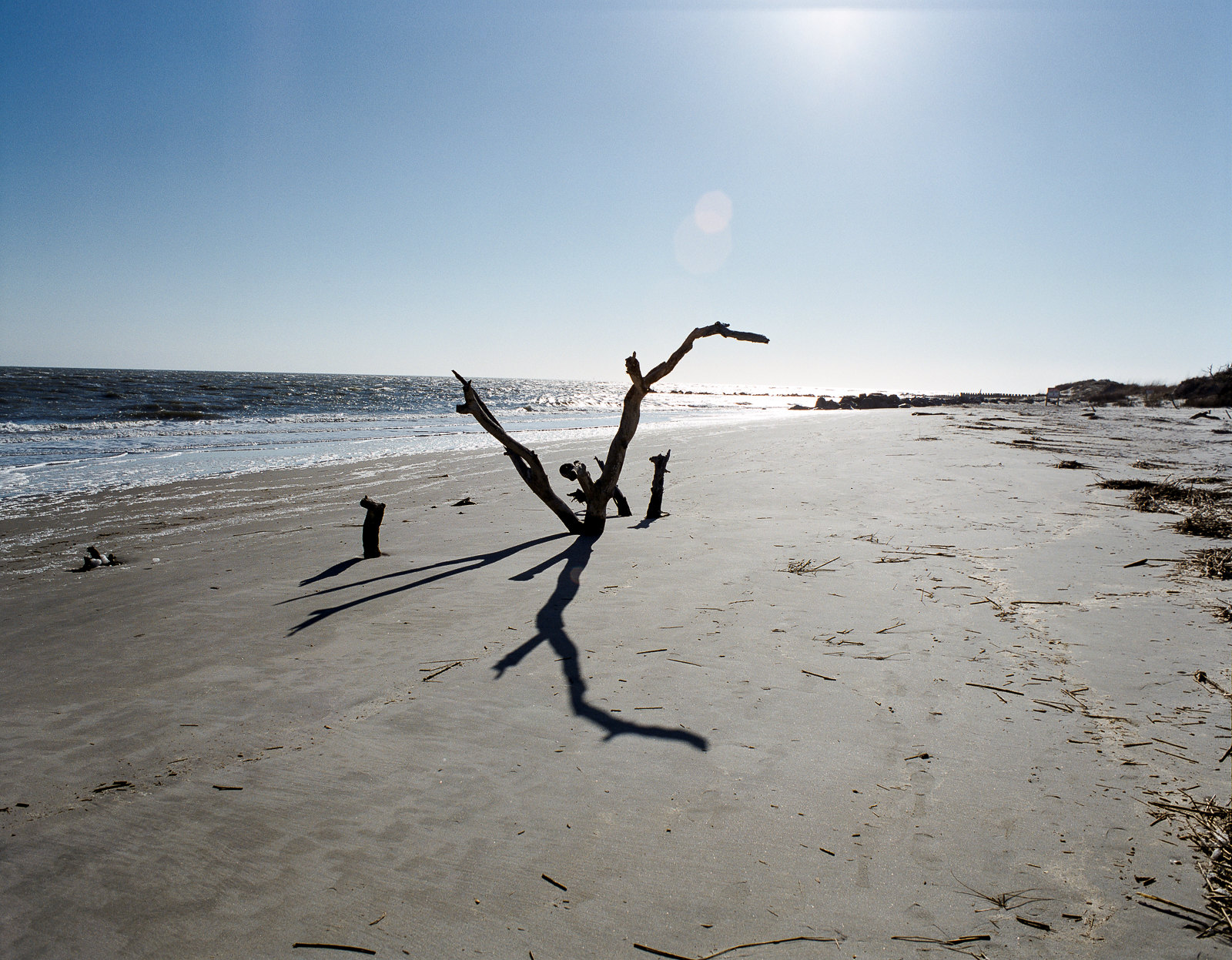
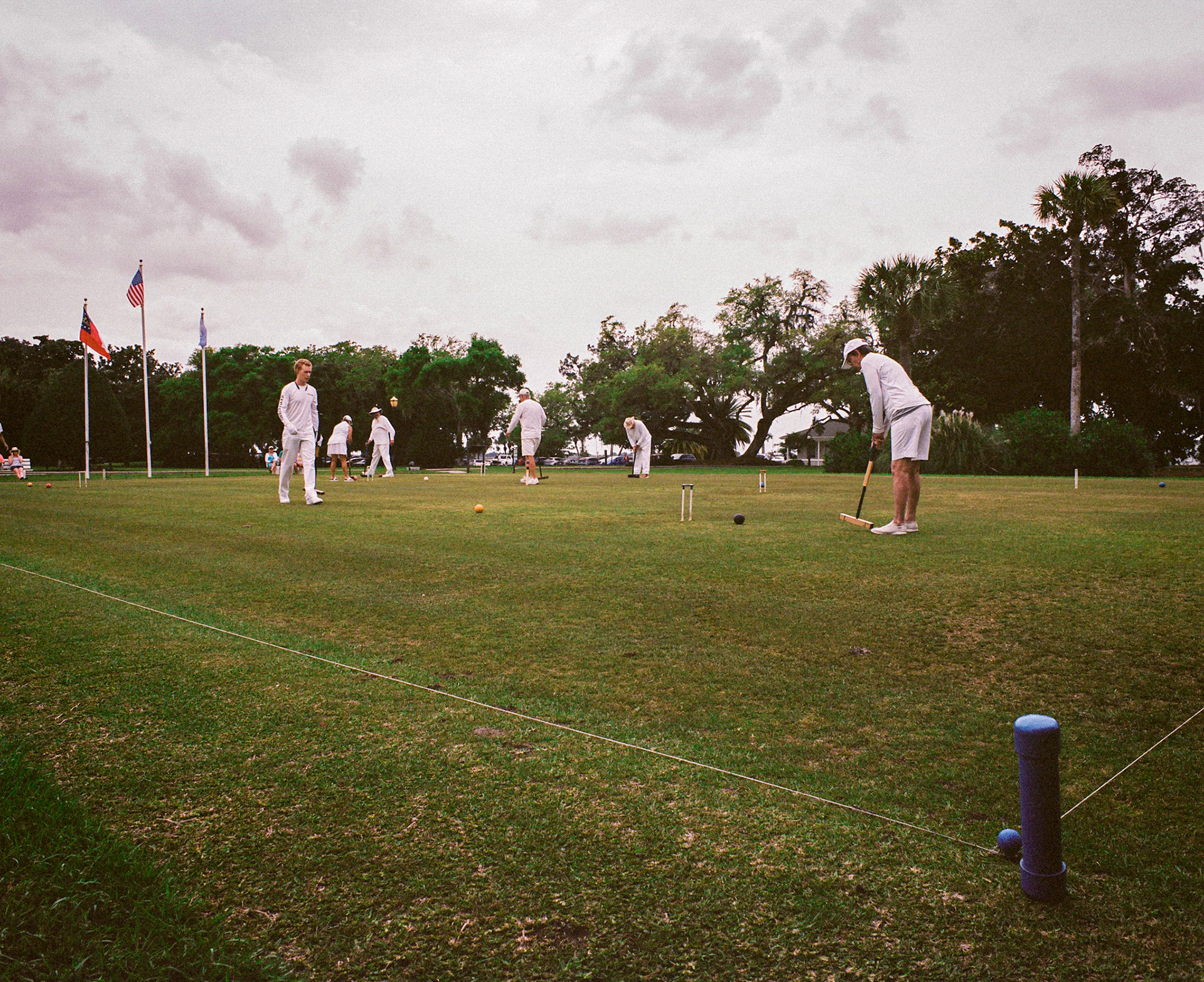
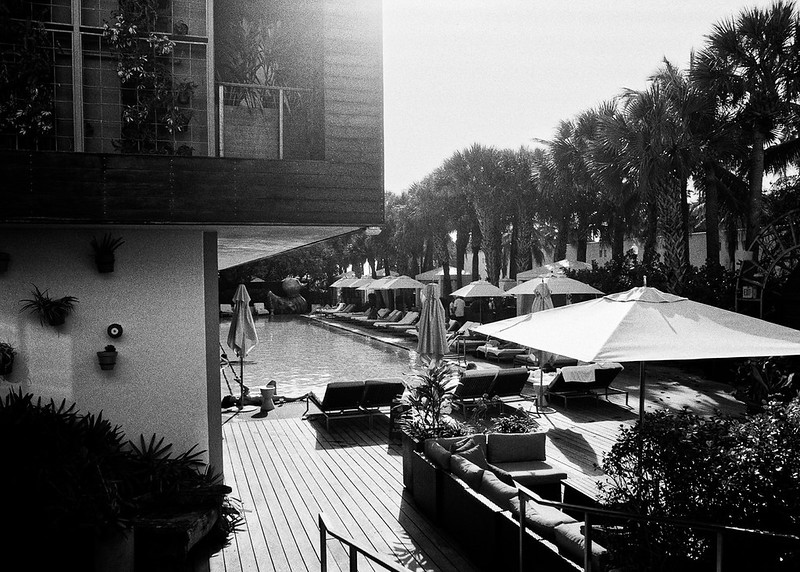
All images on this page were shot on a Pentax 6x7 with various lenses in and around Charleston, SC. These are real-world results — not studio tests — showing what this camera system delivers when you carry it into the field.

Frequently Asked Questions
Common questions about the Pentax 67 system, answered from experience. These cover the questions photographers ask most often when researching this camera.
Is the Pentax 67 worth it in 2026?
Yes. For under $1,000 (body + lens), you get 6x7cm negatives that rival medium format digital backs costing $10,000+. The lens lineup is the best in medium format. The main trade-offs are weight and 10 frames per roll.
Can you shoot the Pentax 67 handheld?
Yes, at 1/125s or faster. The camera weighs about 2.5kg with a prism and lens. The mass absorbs some vibration. Many photographers regularly handhold at 1/60s with sharp results. Use mirror lockup (MLU) even handheld for best results.
What battery does the Pentax 67 use?
The 6x7 and 67 use a 6V 4SR44 (or 4LR44) battery for the metering prism only. The shutter is fully mechanical and works without a battery. The 67II uses two 3V CR123A lithium batteries (6V total) and the shutter is electronic (battery required to shoot).
What is the difference between the Pentax 6x7 and 67?
Primarily branding and the metering prism. The 67 (1989) updated from CdS to SPD metering cells for better accuracy and faster response. The shutter, lens mount, film transport, and accessories are identical. The 6x7 MLU and 67 are functionally the same camera.
How many shots per roll on the Pentax 67?
10 frames on a roll of 120 film. 21 frames on 220 film, but 220 is nearly impossible to find now. Plan on 10 frames per roll. At current prices, each frame costs roughly $1.50–3.00 with processing.
What is CLA and do I need one?
CLA stands for Clean, Lubricate, Adjust. A technician disassembles the camera, cleans old lubricant, applies fresh lubrication, replaces light seals, and calibrates shutter speeds and meter accuracy. Budget $250–400 for a CLA on any used Pentax 67 purchase. It is the single best investment in the camera's reliability.
What is the best Pentax 67 lens?
The SMC Pentax 67 105mm f/2.4 is widely considered the best lens in the system and one of the finest normal lenses in all of medium format. It is razor sharp wide open with beautiful bokeh and a distinctive warm flare characteristic. Buy it first.
How much does a Pentax 67 weigh?
The body alone weighs about 1.3kg (2.9 lbs). With a TTL metering prism and 105mm f/2.4 lens attached, the total weight is approximately 2.5kg (5.5 lbs). Adding a wooden grip adds minimal weight but significantly improves handling.
Is the Pentax 67 good for portraits?
The Pentax 67 is one of the best portrait cameras ever made. The 6x7cm negative with the 105mm f/2.4 produces images with a depth, dimensionality, and tonal richness that digital cameras struggle to match. The shallow depth of field at f/2.4 on a 6x7 negative is extraordinary.
Pentax 67 vs 67II — which should I buy?
The 67II is the better camera with auto exposure, built-in grip, and spot metering, but costs 3–4x more ($1,500–2,500 vs $400–800). For most shooters, the Pentax 67 or 6x7 MLU is the better value. Put the price difference toward lenses and film.
Where can I get a Pentax 67 repaired?
For Pentax 6x7 and 67 bodies, Eric Hendrickson at pentaxs.com is the most trusted specialist — a retired Pentax tech with decades of experience and access to original parts. Free estimates, six-month warranty, and fast turnaround. For the 67II (which Eric does not service), try Advance Camera Repair in Portland, OR. Budget $250–400 for a CLA.
What film should I use in the Pentax 67?
For color: start with Kodak Portra 400 — gorgeous skin tones, wide exposure latitude, and fine grain on 6x7 negatives. For black and white: Ilford HP5 Plus 400 is versatile and pushes well. Both are forgiving stocks that look beautiful in medium format.
Pentax 67 vs Mamiya RB67 — which is better?
Both are 6x7 SLR systems. The Mamiya RB67 has a rotating back and bellows focusing, making it better for studio work. The Pentax 67 handles more like a 35mm SLR with a larger lens selection, making it more versatile for field use and handheld shooting. Both systems have extensive lens lineups.
Can you use Pentax 67 lenses on digital cameras?
Pentax 67 lenses can be adapted to some digital mirrorless cameras (such as Sony E-mount, Fuji GFX, and others) using third-party adapters. On the Fuji GFX medium format digital system, the image circle covers the sensor well. Manual focus only. The 105mm f/2.4 is especially popular for adapted use.
How do you load film in a Pentax 67?
Open the film back via the latch on the left side. Place the fresh roll on the left spool, thread the backing paper leader into the take-up spool on the right. Align the arrow on the backing paper with the red dot on the body. Close the back and wind the advance lever until the counter reaches 1.